

 Click main image to view in full screen. Unlock all 10 preview images:
Discounted Cash Flow (DCF) - Business Valuation Model – Excel XLSX
Excel (XLSX)


BENEFITS OF THIS DOWNLOADABLE EXCEL DOCUMENT
- Enables users to calculate DCF and perform Business Valuation and Sensitivity Analysis
- Customizable for any type of business/industry
VALUATION MODEL EXAMPLE EXCEL DESCRIPTION
The Discounted Cash Flow (DCF) valuation method is a fundamental financial valuation technique used to estimate the value of an investment, company, or asset by projecting its future cash flows and discounting them back to their present value. It is one of the most widely used valuation methods in corporate finance, investment analysis, and project evaluation.
This Financial Model, suitable for any type of investment and project, uses the DCF valuation method to estimate the present value of a business by projecting future cash flows and discounting them to their present value using a chosen discount rate (WACC). It includes detailed forecasts for revenue, operating expenses, taxes, working capital changes, and capital expenditures. The model calculates free cash flow, applies the discount rate, and determines the business's intrinsic value, helping investors assess whether it is undervalued or overvalued. This tool is indispensable for executives seeking a reliable and detailed valuation model.
The template structure follows Financial Modeling Best Practices principles and is fully customizable.
Model Structure:
• Scenarios
Three different operating Scenarios (Base, Upside, Downside), including assumptions that will determine Forecasting
• Projected Cash Flows
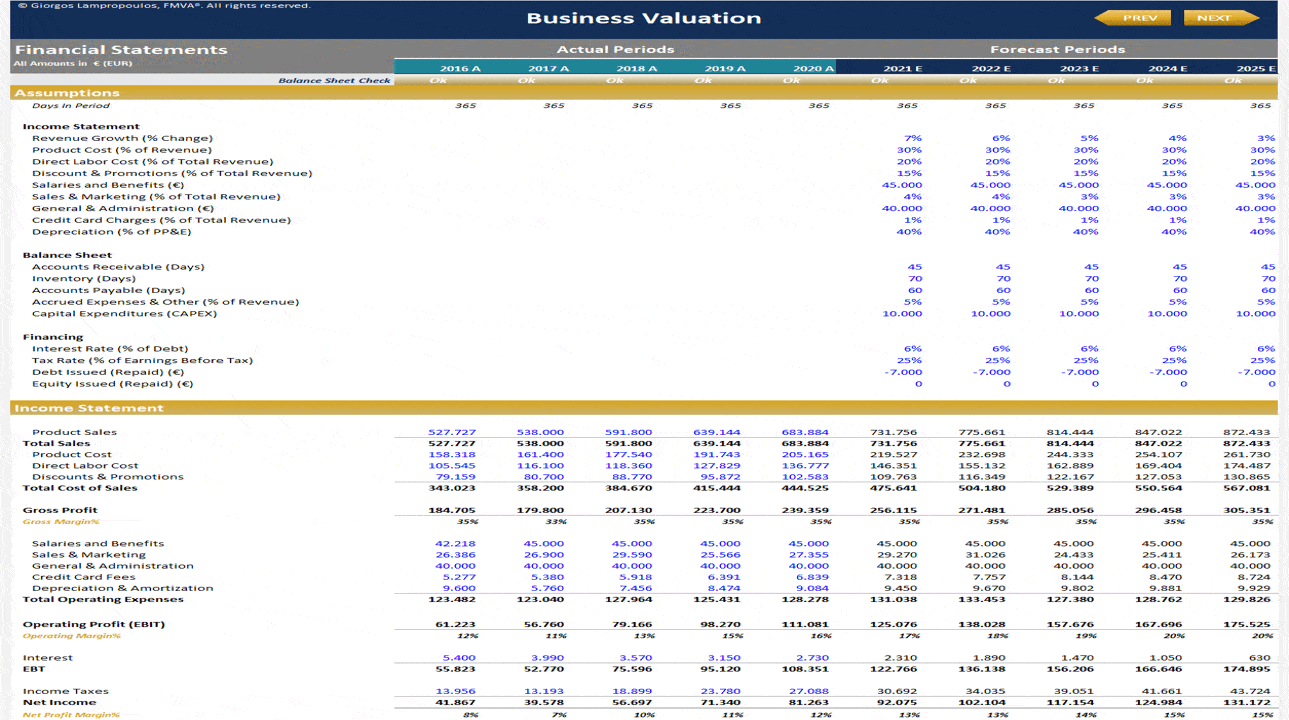
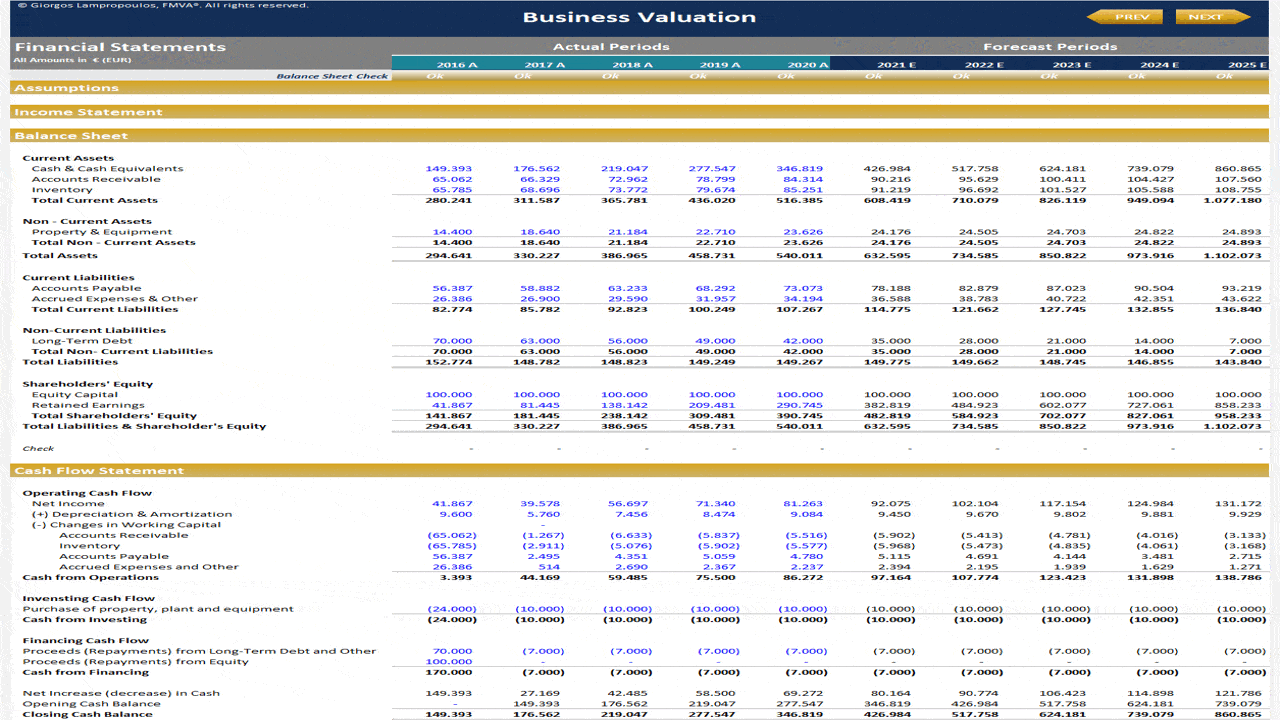
3-Statement Model (Income Statement, Balance Sheet, Cash Flow Statement) incuding 2 years of Historical Data and 8-year Forecast
• Financial Ratios & Performance Dashboard
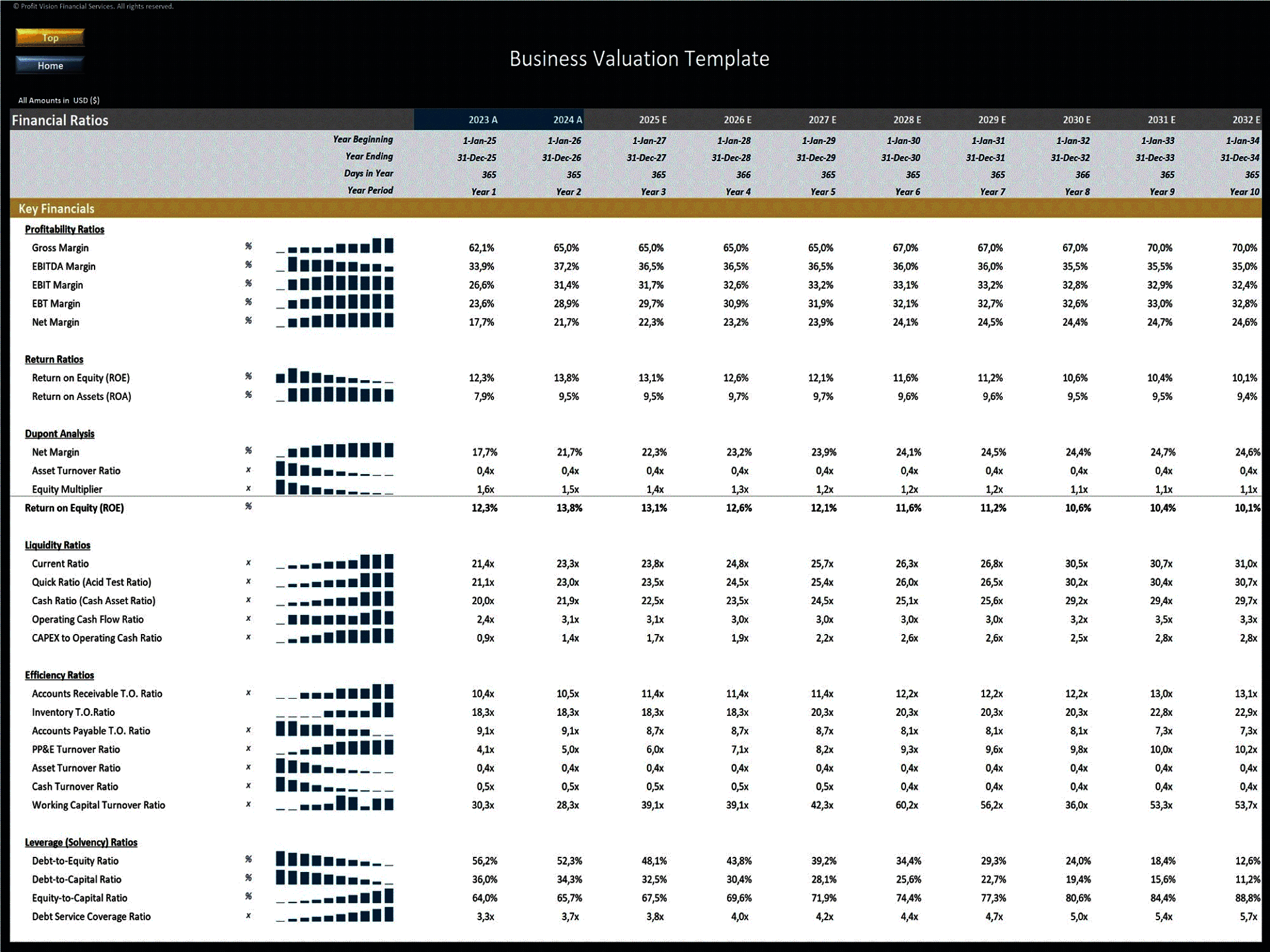
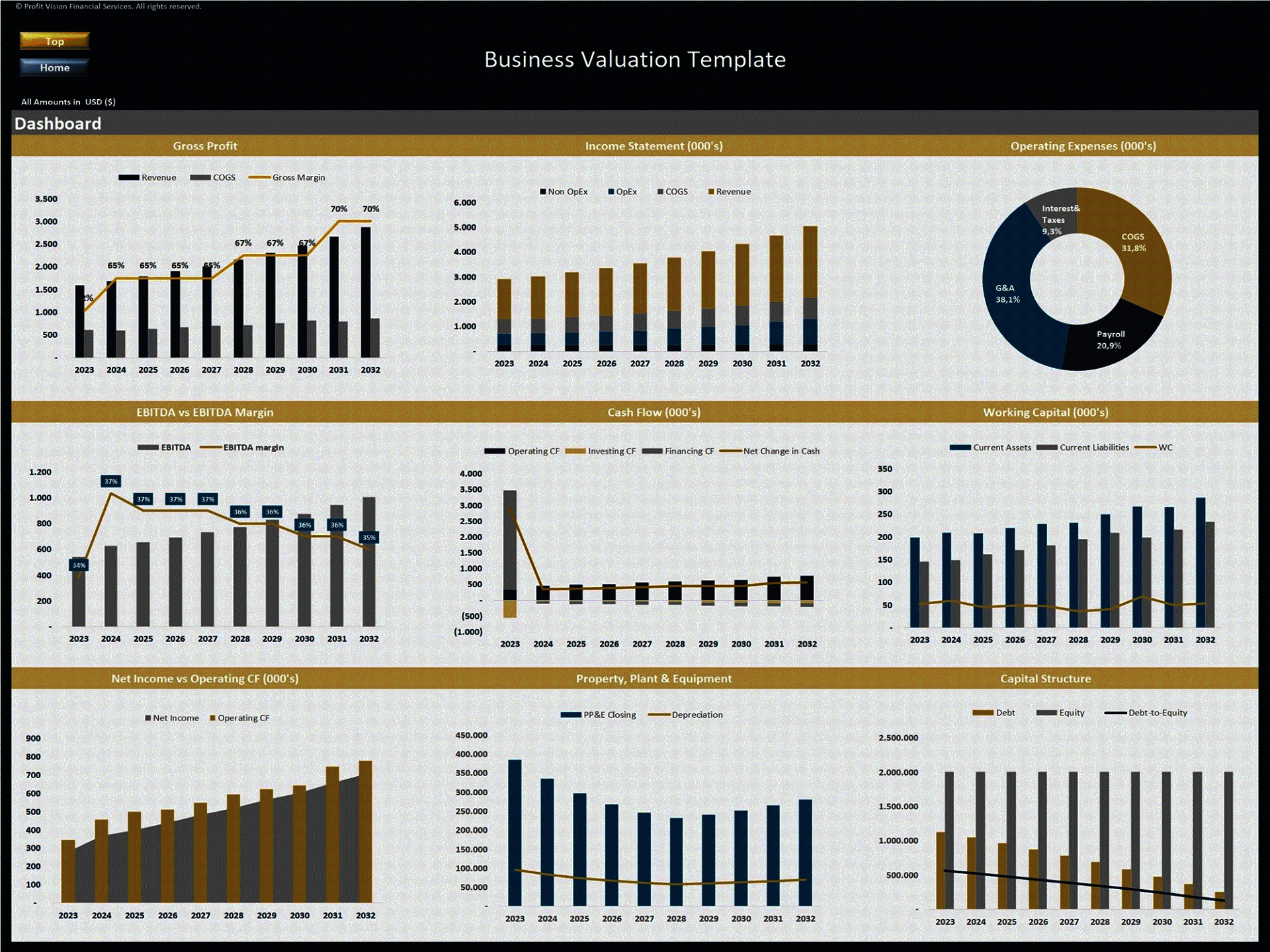
The model includes Financial Ratios and Perfomance Dashboard reports assisting users to monitor business operations and profitability.
• WACC & Comps Analysis
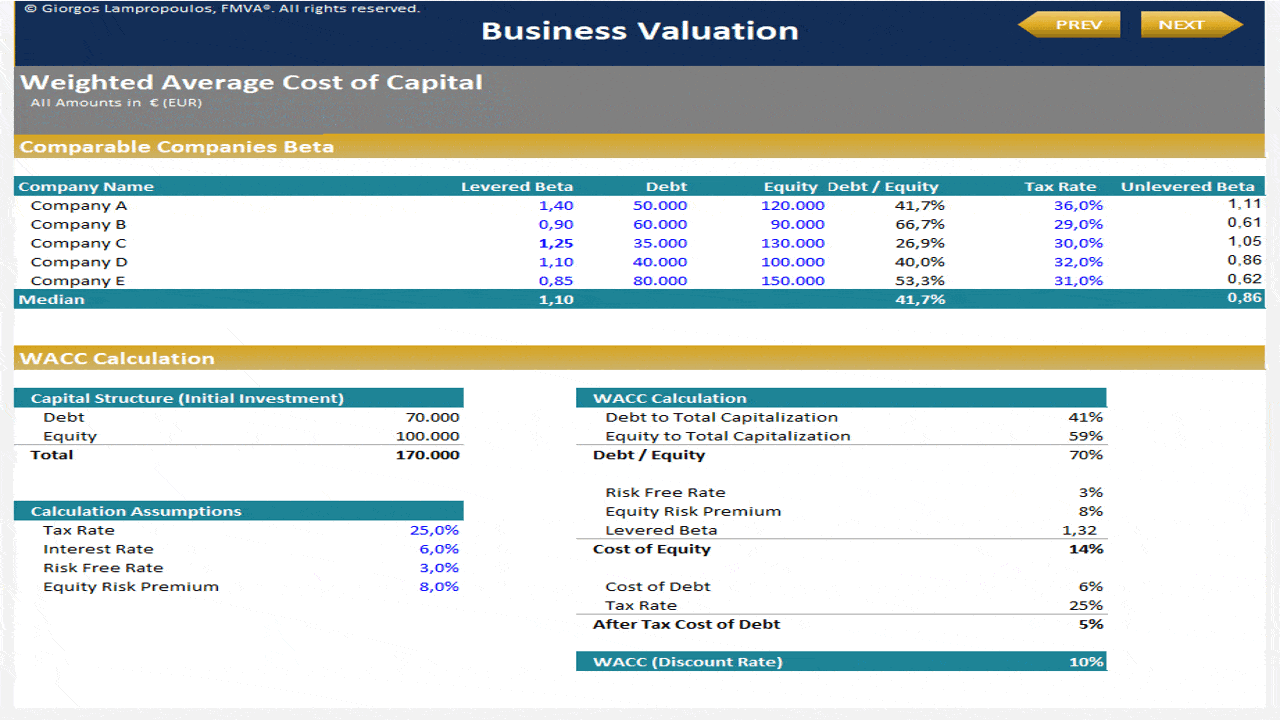
Calculation of Weighted Average Cost of Capital (WACC) and Exit Multiple (EV/EBITDA) based on a Comparable Company valuation methodology
• Business Valuation
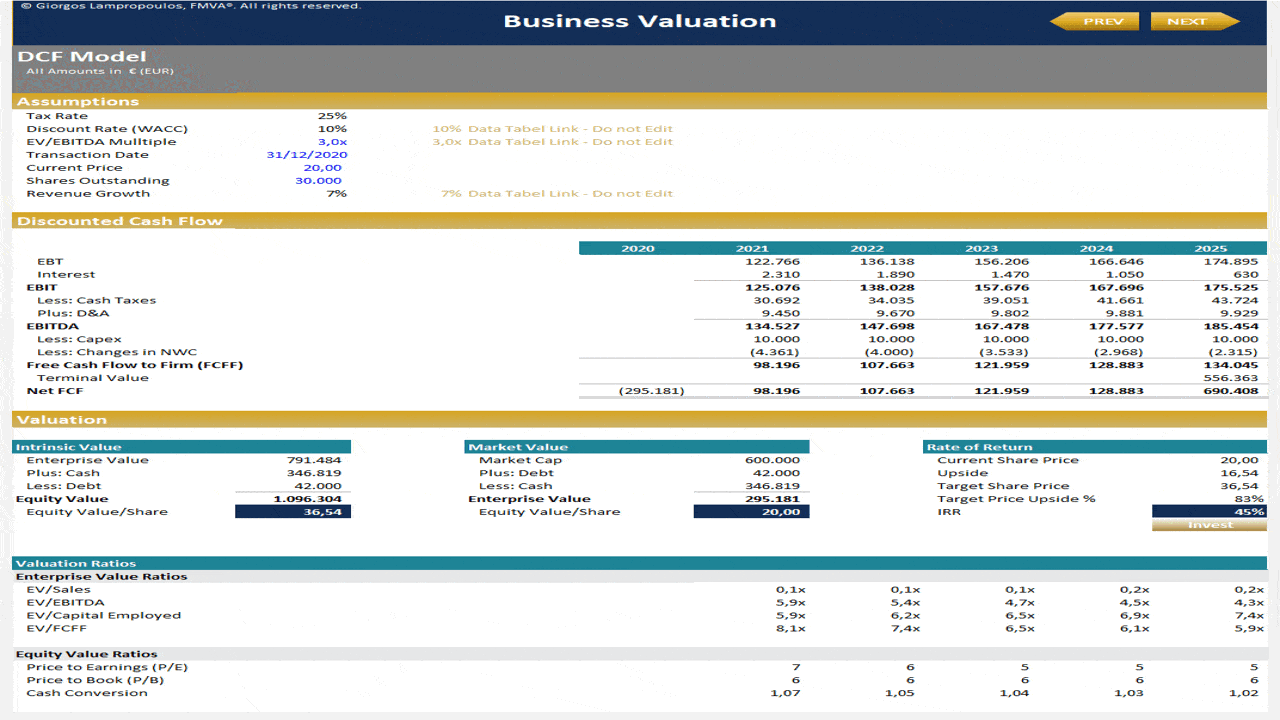
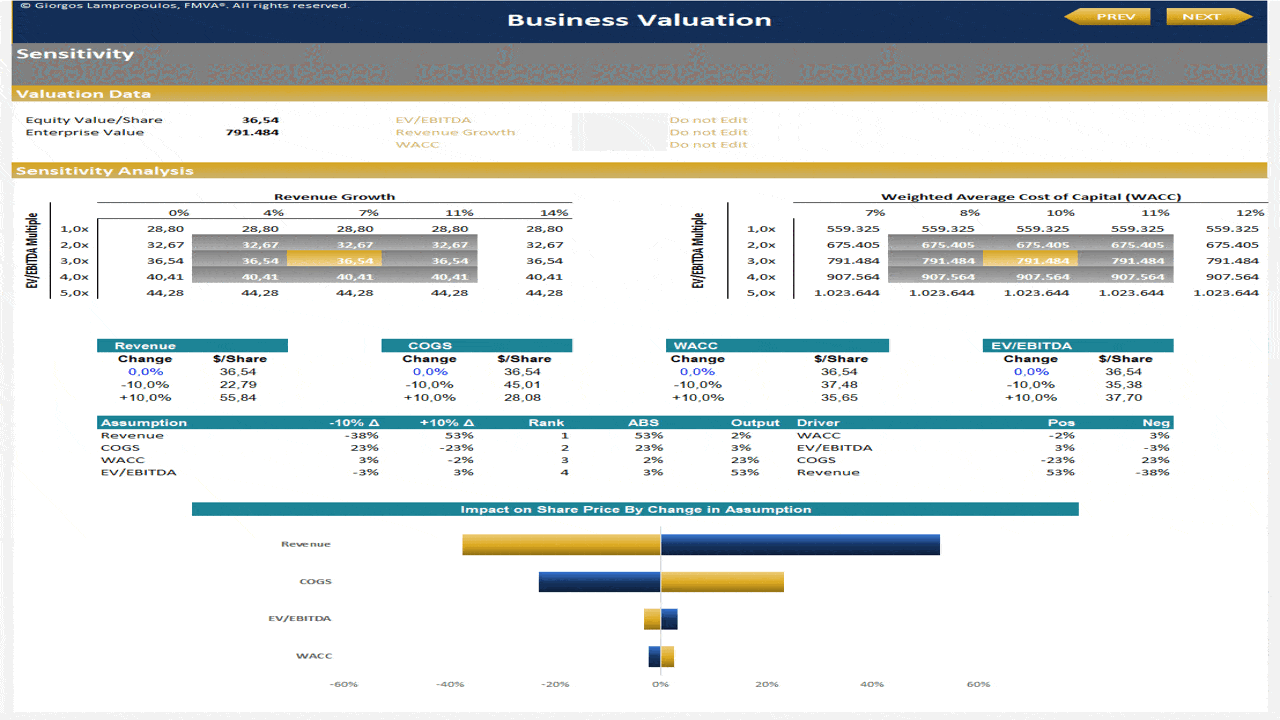
Valuation of the business using the Discounted Cash Flow (DCF) method including calculations of Terminal Value (average of Gordon Growth and Exit Multiple method), Market Cap, Intrinsic Value, Market Value, Share Price upside, IRR, Investment Decision (GO/NO GO), and Sensitivity Analysis
Detailed instructions for the model's functionality are included in the Excel file.
Help & Support
Committed to high quality and customer satisfaction, all our templates follow best-practice financial modeling principles and are thoughtfully and carefully designed, keeping the user's needs and comfort in mind.
No matter if you have no experience or are well versed in finance, accounting, and the use of Microsoft Excel, our professional financial models are the right tools to boost your business operations!
If you, however, experience any difficulty while using this template and you are not able to find the appropriate guidance in the provided instructions, please feel free to contact us for assistance.
If you need a template customized for your business requirements, please e-mail us and provide a brief explanation of your specific needs.
Got a question about the product? Email us at support@flevy.com or ask the author directly by using the "Ask the Author a Question" form. If you cannot view the preview above this document description, go here to view the large preview instead.
TOPIC FAQ
What is the core concept behind Discounted Cash Flow valuation and how is it applied?
DCF estimates a company’s present value by projecting future free cash flows and discounting them to today using an appropriate discount rate. The approach requires building cash flow projections (revenues, opex, taxes, working capital, capex) and applying a discount rate such as WACC as the key discounting input with free cash flow calculations.Which line items are essential when forecasting cash flows for a DCF model?
Essential line items include revenue drivers, operating expenses, taxes, changes in working capital, and capital expenditures; these feed into net income and ultimately free cash flow. A properly structured DCF captures historicals, projects these items forward, and produces free cash flow over the forecast horizon.How is terminal value commonly calculated in DCF valuation models?
Terminal value is typically estimated using either a perpetuity growth model (Gordon Growth) or an exit multiple (EV/EBITDA); many practitioners average both approaches to reduce single-method sensitivity. The terminal value can be presented as an average of Gordon Growth and Exit Multiple outputs.What role does WACC play in a DCF and how does it affect valuation?
WACC (Weighted Average Cost of Capital) serves as the discount rate in DCF models, converting future cash flows into present value; a higher WACC lowers present value while a lower WACC raises it. Accurate WACC calculation is therefore central to the valuation outcome.What should I look for when choosing a DCF template for a corporate valuation project?
Choose a template that includes scenario analysis, a 3-statement model with historical data, forecast mechanics for revenue and costs, WACC and comps support, terminal value options, sensitivity tables, and user instructions. For example, Flevy’s Discounted Cash Flow (DCF) - Business Valuation Model lists a 3-statement structure with 2 years historical and an 8-year forecast.Can non-experts use a downloadable DCF template, and what support should it provide?
Non-experts can use templates that include clear guidance, labeled inputs, and built-in calculations; such templates should be customizable and include instructions and support contact details. Flevy’s Discounted Cash Flow (DCF) - Business Valuation Model includes detailed instructions inside the Excel file.If I must evaluate an acquisition target quickly, which model components should I prioritize?
Prioritize creating a defensible revenue and cost forecast, calculating WACC, running Base/Upside/Downside scenario runs, and performing a sensitivity analysis on terminal value and discount rate assumptions. Flevy’s Discounted Cash Flow (DCF) - Business Valuation Model highlights scenario outputs and sensitivity analysis for rapid assessment.How do scenario analysis and sensitivity tables improve the usefulness of a DCF valuation?
Scenario analysis (e.g., Base, Upside, Downside) and sensitivity tables reveal how valuation outputs respond to key assumption changes, clarifying ranges of intrinsic value, share price upside, and IRR under different assumptions. These tools provide quantified outcome ranges using Base, Upside, Downside scenarios and sensitivity analysis.Source: Best Practices in Valuation Model Example, Valuation Excel: Discounted Cash Flow (DCF) - Business Valuation Model Excel (XLSX) Spreadsheet, Profit Vision
ABOUT THE AUTHOR

Profit Vision provides Consulting & Outsourced Financial Services as well as Financial Planning & Performance analysis to small and mid-size businesses by implementing efficient and effective tools to assist them with start-up business plans or improve their ongoing operations.
Our range of services include Financial & Operational Analysis, Business Planning, Budgeting & Forecasting, Cash Flow
... [read more]
Ask the Author a Question
You must be logged in to contact the author.




























